
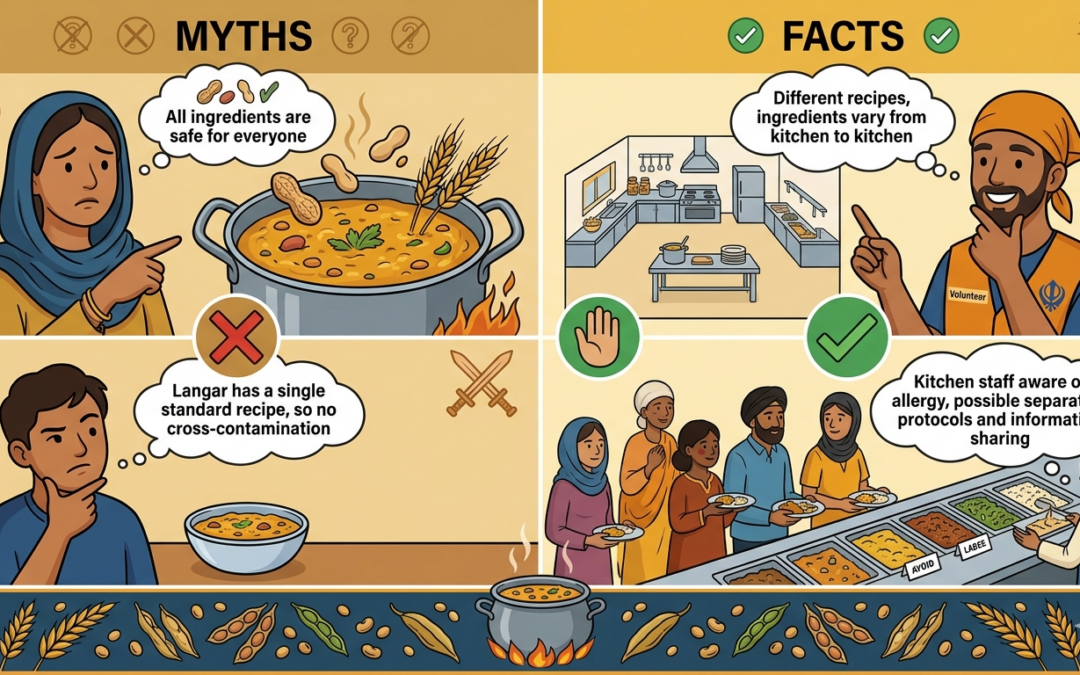
Langar, the free community meal served in Gurdwaras, holds a special place in Sikh tradition, symbolizing equality, humility, and community care. While it’s a welcoming tradition for all, individuals with food allergies may have concerns about safely participating. This article addresses common food allergy myths and presents key facts to ensure a safe and inclusive langar experience.
Understanding Langar and Food Allergies
Langar is the community meal served in a Gurdwara (Sikh temple). It is open to everyone, regardless of religion, background, or social status. The meal is typically vegetarian, representing simplicity and shared community care. Sevadar (volunteers) prepare and serve food as an act of selfless service.
Despite being vegetarian, langar meals are not free from allergens. It’s important to understand the ingredients and practices involved to ensure everyone can safely participate, particularly those with food allergies.
For more information about langar food and its significance, check out our guide on What is Gurudwara Langar Food?.
Common Food Allergens in Langar Dishes
Langar dishes include a variety of vegetarian ingredients, some of which can trigger allergic reactions. The most common allergens found in langar meals include wheat, dairy, legumes, nuts, seeds, and spices. Below are some of the key allergens to look out for in langar foods:
- Wheat / Gluten: Found in roti (flatbread) and Kada Prashad (a sacred sweet offering).
- Dairy: Present in ghee (clarified butter), used in cooking, and milk used in desserts like kheer (rice pudding).
- Legumes: Common in dishes like dhal (lentils), chole (chickpea curry), and rajma (kidney bean curry).
- Nuts: Found in some desserts or special dishes like barfi and kheer.
- Sesame: Used in breads and snacks in some Gurdwaras.
- Spices: Though not allergens in the traditional sense, spices like cumin, turmeric, and chili can cause sensitivities.
Debunking Common Myths About Langar and Food Allergies
Myth 1: Langar Food Is Safe for People with Allergies Because It’s Vegetarian
Fact: While langar is typically vegetarian, it still contains allergens like wheat, dairy, and legumes. For example, roti contains wheat and gluten, while Kada Prashad is made with ghee (dairy). Just because the food is vegetarian does not mean it is free from allergens.
Myth 2: All Langar Foods Are the Same Across Gurdwaras
Fact: Ingredients and preparation methods vary from Gurdwara to Gurdwara. Different Gurdwaras may use different cooking oils, ghee, or spices. It’s important to ask about ingredients at each location, especially if you have specific allergies.
Myth 3: Asking About Ingredients in Langar Is Impolite
Fact: Asking about food ingredients is not impolite. In fact, it’s crucial for your safety. Sevadars (volunteers) are there to help, and they are happy to explain what’s in the dishes. It’s always better to ask questions to avoid allergens and stay safe.
Myth 4: Langar Is Nut-Free
Fact: While many langar dishes are nut-free, some desserts or special dishes may contain nuts like almonds, cashews, and pistachios. It’s essential to check with the sevadars about specific dishes that might contain nuts, especially in sweets.
Myth 5: Langar Is Safe for People with Gluten Sensitivities
Fact: Gluten is present in many langar foods, including roti (flatbread) and Kada Prashad. These dishes are made with wheat and gluten and should be avoided by individuals with celiac disease or gluten sensitivities. It’s crucial to check the ingredients before eating.
Key Facts About Food Allergies and Langar
Fact 1: Langar Is Open to Everyone, Including Those with Allergies
Langar is a community meal, designed to be inclusive. It’s open to all visitors, including those with food allergies. Gurdwaras strive to create a safe environment for everyone, and if you have allergies, you should feel comfortable asking about ingredients. It’s about community care and ensuring everyone is welcome.
Fact 2: Some Gurdwaras Are Becoming More Allergy-Aware
Many Gurdwaras are improving their approach to allergy awareness. Some are now labeling dishes with their ingredients, highlighting common allergens such as dairy, nuts, wheat, and soy. Sevadars are being trained to handle allergy questions and make the langar experience safer for all visitors.
Fact 3: Some Langar Dishes Offer Allergy-Free Alternatives
In response to increasing awareness of food allergies, some Gurdwaras are offering allergy-free alternatives. These may include gluten-free roti, dairy-free dhal, and nut-free desserts. If you have specific dietary restrictions, it’s best to inform the sevadars ahead of time, so they can help you find suitable options.
Fact 4: Clear Communication Is Key to Staying Safe
Clear communication about food allergies is essential. Always inform sevadars about your allergies, so they can direct you to the safest dishes. Don’t be afraid to ask for ingredient details, and always check for cross-contact risks. Safety first should be the goal.
Best Practices for Participating in Langar with Food Allergies
Always Ask About Ingredients Before Eating
The most effective way to stay safe in langar is to ask about the ingredients in the food. Don’t assume that all langar dishes are free from allergens. Whether it’s dairy, nuts, or gluten, it’s always best to verify with the sevadars before consuming the dish.
Bring Your Epinephrine Auto-Injector (EpiPen)
For those with severe food allergies, it’s important to carry an epinephrine auto-injector (EpiPen). While langar is served with care, emergencies can happen, and it’s better to be prepared in case of accidental exposure.
Conclusion
Langar is a vital tradition that encourages community, inclusion, and selfless service. However, individuals with food allergies need to be cautious, as many langar dishes contain common allergens like dairy, wheat, and legumes. By asking about ingredients and following safety tips, you can enjoy the meal and community spirit of langar while staying safe.
Still have doubts related to Gurdwara Langar?
Visit our website to learn more about how it works and explore how langar can be a safe and inclusive experience for everyone