
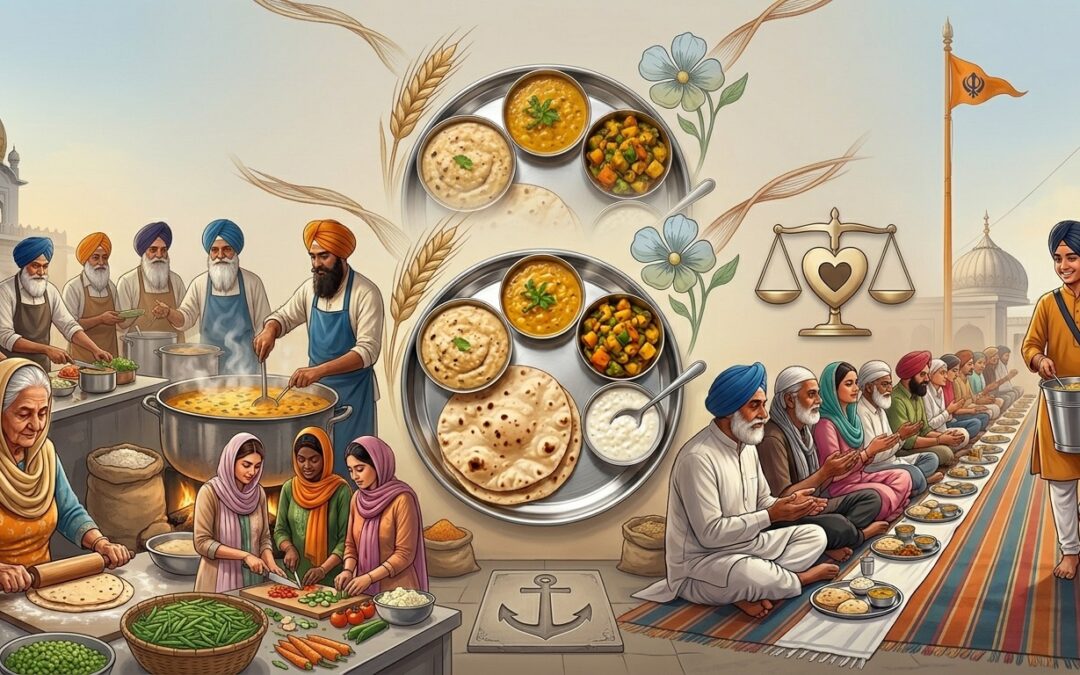
Gurudwara Langar food is the free vegetarian meal served in a Gurdwara, the Sikh place of worship. It is open to everyone, including Sikhs, non-Sikhs, visitors, families, travelers, and people in need.
Langar is more than a meal. It is a Sikh practice that expresses equality, selfless service, humility, compassion, and community care.
In simple terms:
Langar means everyone is welcome, everyone is equal, and everyone deserves food with dignity.
People usually sit together and eat the same meal, regardless of religion, caste, income, gender, background, or social status. This shared meal turns Sikh values into a real community experience.
Langar food commonly includes simple vegetarian dishes such as roti, dhal, rice, sabzi, chole, and Kada Prashad. Because recipes can vary by Gurdwara, visitors with food allergies should ask about ingredients before eating.
What Does Langar Mean?
Langar means a free community kitchen and shared meal connected with Sikh tradition. In a Gurdwara, langar is prepared and served so every person can eat without payment, judgment, or social separation.
The word is commonly used in two ways:
| Meaning | Explanation |
|---|---|
| Community kitchen | The place where volunteers prepare food for visitors and the sangat |
| Shared meal | The food served to everyone as a sign of equality and care |
Langar is closely connected with several Sikh concepts:
- Seva means selfless service. Volunteers cook, serve, clean, organize, and support visitors without expecting reward.
- Sangat means the community or congregation gathered together.
- Pangat means sitting together in rows as equals while eating.
Langar is not only about feeding people. It reduces social barriers and allows a visitor, volunteer, child, elder, wealthy person, poor person, Sikh, and non-Sikh to sit in the same space and receive the same food.
Why is Langar Served in a Gurdwara?
Langar is served in a Gurdwara to practice the Sikh principle that all people are equal and deserving of food, dignity, and respect.
It connects worship with action. After prayer, learning, or community gathering, people share a meal prepared through seva.
Langar fulfills several purposes:
- It supports equality because everyone receives the same food without social ranking.
- It encourages seva because volunteers prepare, serve, and clean as an act of service.
- It offers community care because food is available to visitors, families, travelers, and people in need.
- It teaches humility because serving others reduces pride and encourages compassion.
- It strengthens inclusion because people from different backgrounds can sit and eat together.
The Gurdwara is not only a place for prayer. It is also a place where spiritual values become visible through food, service, and hospitality.
Langar also supports the Sikh idea of pangat, where people sit together in rows and eat as equals. This removes visible separation between rich and poor, local and visitor, Sikh and non-Sikh.
The Deeper Meaning of Gurudwara Langar Food
Gurudwara Langar food carries spiritual, social, and community meaning. It shows that human dignity does not depend on wealth, caste, religion, background, or status.
Langar turns Sikh values into lived experience:
- Everyone receiving the same food shows equality in practice.
- Sitting together reduces social separation.
- Volunteers serving others make seva part of daily community life.
- Free food shows care without transaction.
- Simple vegetarian meals keep the focus on unity, not luxury.
Langar also teaches humility. A person may serve food one day and receive food another day. Both roles carry dignity because the focus is not status; it is service.
For families and children, langar becomes a practical way to understand Sikh values. They see sharing, respect, and community care through real action.
For visitors, langar offers a simple introduction to Sikh hospitality: you are welcome, you can sit with us, and you can share this meal.
This meaning also makes food awareness important. If langar is built on inclusion, clear ingredient communication helps more people participate safely, including visitors with food allergies or dietary restrictions.
What Food is Commonly Served in Gurudwara Langar?
Gurudwara Langar food is usually simple, vegetarian, and prepared in large quantities for the sangat and visitors. The exact dishes can vary by Gurdwara, location, occasion, and community tradition.
Common langar foods include roti or chapati, dhal, rice, sabzi, chole, Kada Prashad, and sometimes kheer.
Roti or chapati is a flatbread commonly made with wheat flour and water. Dhal is usually made from lentils, water, spices, and sometimes oil or ghee. Rice may be plain or lightly seasoned. Sabzi is a cooked vegetable dish. Chole is a chickpea curry. Kada Prashad is a sacred sweet offering commonly made with wheat flour, ghee, sugar, and water.
Most langar meals are built around a few staple foods: bread, lentils, rice, vegetables, and prashad. These foods are affordable, easy to prepare for many people, and suitable for shared vegetarian meals.
For visitors with allergies, common ingredients such as wheat, ghee, milk, lentils, chickpeas, nuts, seeds, and spices may need attention. Recipes are not always the same in every Gurdwara, so ingredient confirmation is important before eating.
Why is Langar Usually Vegetarian?
Langar is usually vegetarian so more people can share the same meal, regardless of religious background, cultural food rules, or personal dietary choices.
The purpose of langar is not to offer many separate menus. Its purpose is to create one shared meal that supports equality and inclusion.
Vegetarian langar helps because it allows wider participation, keeps the meal simple, supports large-scale preparation, and respects visitors from different backgrounds.
Langar food is usually simple because the meaning comes from seva, equality, and community, not from luxury or variety.
However, vegetarian does not always mean allergy-safe. Roti may contain wheat, Kada Prashad usually contains wheat and ghee, and some dishes may include dairy, nuts, seeds, or legumes. People with allergies should still ask about ingredients before eating.
Who Can Eat Langar?
Anyone can eat langar. You do not have to be Sikh, Punjabi, Indian, religious, or part of a specific community to receive langar in a Gurdwara.
Langar is open to Sikh families, non-Sikh visitors, travelers, people in need, children, elders, and volunteers. The key idea is simple: langar is offered without social ranking.
A wealthy person, a person facing hardship, a local resident, and a first-time visitor may sit together and receive the same food.
Visitors are usually expected to respect the Gurdwara environment by covering the head where required, removing shoes in designated areas, sitting respectfully, and avoiding food waste.
People with food allergies or dietary restrictions can still attend langar, but they should ask about ingredients before eating. This is especially important for foods that may contain wheat, dairy, nuts, lentils, chickpeas, seeds, or spices.
What Happens During Langar?
During langar, food is prepared, served, eaten, and cleaned up through seva. The process may vary by Gurdwara, but the main experience is usually simple and welcoming.
Sevadars prepare food in the langar kitchen. Common dishes may include roti, dhal, rice, sabzi, and other vegetarian foods. Volunteers then serve visitors and the sangat with respect. People often sit together in rows, known as pangat, and share the same meal.
After eating, volunteers clean dishes, floors, serving areas, and kitchen spaces so the langar hall is ready for others.
In some Gurdwaras, people sit on the floor. In others, tables and chairs may be available for elders, disabled visitors, families, or people who need support.
For people with food allergies, the best time to ask about ingredients is before sitting down to eat. A simple question such as “Does this dish contain wheat, dairy, nuts, or other allergens?” can help avoid confusion.
What is the Role of Seva in Langar?
Seva means selfless service. In langar, seva is the act of helping others without expecting payment, praise, or special recognition.
Langar depends on seva at every stage. People may help by preparing food, serving meals, cleaning dishes, organizing ingredients, guiding visitors, supporting elders, or answering questions.
Seva is not limited to one role. A person may cook, serve, clean, donate ingredients, or help organize the langar hall. Each act supports the same purpose: serving the community with humility.
In langar, the person serving and the person receiving food are both part of the same community. This is why seva strengthens equality instead of creating status.
For Gurdwaras and volunteers, our langar safety checklist for sevadars can support clearer serving practices, ingredient awareness, and visitor communication.
What is the Community Value of Langar?
Langar strengthens the community by turning food into shared support. It gives people a place to eat, serve, connect, and feel included without needing money or social status.
Langar supports the community by creating belonging, encouraging mutual support, teaching Sikh values, connecting generations, helping people in need, and reducing social separation.
It also creates trust inside the sangat. When people prepare food together, serve together, and clean together, the Gurdwara becomes more than a worship space. It becomes a center of community care.
This community value can be strengthened when Gurdwaras make ingredient information easier to understand. Clear food communication helps families, children, elders, visitors, and people with allergies participate with more confidence.
For practical support, see our guide on displaying langar food ingredients clearly.
Why Langar Is Important for Children and Families
Langar helps children and families experience Sikh values through action. Instead of only hearing about equality, service, and sharing, children see these values practiced in the Gurdwara.
Children learn that everyone receives the same food, volunteers serve without expecting reward, food should not be wasted, and helping others is part of community life.
For families, langar creates a routine where faith, culture, food, and community come together. It gives children a practical way to understand that service is not only something people talk about; it is something people do.
Families with food allergies may need extra preparation before eating langar. Parents can ask about ingredients, explain allergy needs to sevadars, and guide children on which foods are safe for them.
Langar and Inclusion
Langar is built on the idea that every person should be welcomed with dignity. It includes people across religion, caste, income, gender, age, language, and social background.
Inclusion in langar means more than opening the door. It means helping people participate respectfully, safely, and comfortably.
This can include clear guidance for first-time visitors, simple explanations for non-Sikh guests, seating support for elders, accessible spaces for disabled visitors, and ingredient information for people with food allergies or dietary restrictions.
Food allergy awareness is part of inclusion. A visitor may want to join the sangat but feel unsure if food ingredients are unclear. Simple ingredient labels, trained sevadars, and respectful communication can help reduce that concern.
Langar becomes more inclusive when no one feels embarrassed for asking a question, declining a dish, or needing extra care.
Is Langar Free?
Yes. Langar is free for everyone. No payment is required to receive food in a Gurdwara langar hall.
Langar is supported through seva, donations, community contributions, and volunteer work. People may donate money, ingredients, supplies, or time, but donation is not required before eating.
The free nature of langar is important because the meal is not treated as a purchase. It is an act of community care and Sikh service.
Visitors should receive langar with respect, avoid wasting food, and ask questions when needed, especially if they have food allergies or dietary restrictions.
Do You Have to Be Sikh to Eat Langar?
No. You do not have to be Sikh to eat langar. Langar is open to people from all religions, cultures, countries, languages, and social backgrounds.
A Gurdwara welcomes visitors who come respectfully, whether they are Sikh, non-Sikh, religious, not religious, local, or traveling.
The main expectation is respect for the Gurdwara space. Visitors are usually asked to cover their head, remove shoes in designated areas, sit respectfully, and avoid wasting food.
People with food allergies should not feel pressured to eat anything unsafe. Asking about ingredients or choosing not to eat a dish is acceptable.
Basic Langar Etiquette for Visitors
Langar is open to everyone, but visitors should follow basic Gurdwara etiquette to show respect for the space, the sangat, and the seva behind the meal.
Before entering certain areas of the Gurdwara, visitors may be asked to cover their head and remove their shoes. In the langar hall, they should sit respectfully, accept only the amount of food they can eat, avoid waste, and follow guidance from sevadars.
Visitors do not need to know every custom before arriving. A respectful attitude, willingness to listen, and simple questions are usually enough.
For people with food allergies, etiquette also includes clear communication. You can say:
“I have a food allergy. Can you please tell me what ingredients are used in this dish?”
It is better to ask before food is served than to guess after receiving it. If ingredients are uncertain, choosing not to eat a dish is respectful and safe.
Food Allergy Awareness in Langar
Food allergy awareness helps make langar safer and more inclusive for visitors who cannot eat certain ingredients. Langar is usually vegetarian, but vegetarian food can still contain allergens.
Common allergy concerns in langar include wheat or gluten from roti, chapati, Kada Prashad, or some fried foods. Dairy may appear in ghee, kheer, or some dhal and sabzi recipes. Nuts may be used in sweets or special dishes. Sesame, seeds, legumes, and spices may also matter depending on the person’s allergy.
A dish may look simple but still contain ingredients that matter for allergy safety. For example, roti usually contains wheat, and Kada Prashad commonly contains wheat flour and ghee.
The safest approach is to ask before eating:
“Does this dish contain wheat, dairy, nuts, seeds, or any other allergens?”
If the ingredients are unclear, it is better not to eat the dish. Guessing can create risk, especially for people with severe allergies.
Gurdwaras can support visitors by using clear ingredient labels, avoiding uncertain answers, and guiding people to someone who knows how the food was prepared.
How Gurdwaras Can Make Langar More Allergy-Aware
Gurdwaras can make langar more allergy-aware by improving ingredient communication and reducing avoidable confusion. The goal is not to change the spirit of langar, but to help more people participate safely.
Useful practices include:
- Displaying dish names clearly.
- Listing main ingredients.
- Marking common allergens such as wheat, dairy, nuts, sesame, soy, and legumes where relevant.
- Using separate serving utensils where possible.
- Avoiding guesses when ingredients are uncertain.
- Training sevadars on basic allergy questions.
- Adding notes such as “ingredients may vary” or “prepared in a shared kitchen.”
A simple label could say:
Kada PrashadIngredients: wheat flour, ghee, sugar, water
Contains: wheat, dairy
Note: ingredients may vary by Gurdwara
Clear labels support both visitors and sevadars. Visitors do not have to ask the same question repeatedly, and volunteers can avoid giving uncertain answers.
Why Langar Still Matters Today
Langar still matters because it responds to real human needs: food, dignity, belonging, and community support.
In a world where people are often separated by income, religion, culture, language, and social status, langar creates a shared space where those differences do not decide who is welcomed or served.
Langar remains practical today because it provides food access, supports social equality, builds community connection, encourages service, preserves Sikh values, and welcomes people across backgrounds.
A person may enter the Gurdwara as a visitor and leave with a clearer understanding of Sikh hospitality, equality, and community care.
As communities become more aware of health and dietary needs, langar can continue this purpose through clearer ingredient communication, respectful questions, and safer serving practices.
Summary
Gurudwara Langar food is a free vegetarian meal served in a Gurdwara. It is open to everyone and reflects Sikh values such as equality, seva, humility, compassion, and community care.
Langar is meaningful because it connects food with service. People prepare, serve, eat, and clean together as part of one shared community experience.
Langar is free. Langar is open to all. Langar supports equality. Langar depends on seva. Langar builds community. Langar can become even more inclusive when ingredient awareness helps visitors with allergies or dietary restrictions.
Langar is not only a meal. It is a practical expression of Sikh hospitality and shared human dignity.
FAQs About Gurudwara Langar Food
Can visitors help with Langar seva?
Yes. Visitors may help with cooking, serving, cleaning, or organizing if the Gurdwara allows it. Langar seva means serving others with humility and respect.
Do you need to bring anything to eat Langar?
No. Visitors do not need to bring anything to receive Langar. Some may choose to donate food, money, or time, but Langar is offered freely.
Why do people sit on the floor during Langar?
Many Gurdwaras invite people to sit on the floor in pangat to show equality. Sitting together removes social ranking and supports the shared meal experience.